
Relay
Relay is a journey-led travel app that helps individuals and groups plan trips, coordinate decisions, explore destinations, and stay aligned throughout the journey. It combines shared planning, contextual discovery, and flexible itineraries to reduce friction and make travel easier to manage.
Year
2025
Domain
UX Case Study, UI Design
Problem
Travel planning today depends on multiple disconnected apps, resulting in confusion, delays, and poor group coordination.
Instead of feeling seamless and enjoyable, the travel experience becomes stressful, with users overwhelmed by logistics rather than able to focus on the journey itself.
Constraints
Built within strict academic timelines and scope, requiring smart prioritization between research and execution. Limited access to diverse types of travelers meant insights were gathered through focused surveys and interviews.
Impact
82% of users found planning faster with AI itineraries and group voting, while AR/VR previews increased booking confidence.
Features like Hire a Chef were well received by the vegetarian demographic, while 76% thought crowd insights will be helpful in avoiding delays.


Market Research
Market research focused on understanding user needs, industry trends, and opportunities within the travel experience domain.
$19.44 B
India Travel & Tourism Market was valued at USD 19.44 billion in 2024.
Market Size & Growth
1
From Gen Z (78%) to Boomers (45%), travelers are embracing AI to plan their trips.

User Behavior
2
Half of Indians travel yearly with friends (50%) or immediate family (52%), followed by extended family (42%) and partners (38%).
15.67%
The projected annual growth rate (CAGR 2025-2030) of 15.67% for the travel and tourism industry.

Group Travel Challenges
3
Fragmented tools make trip planning stressful and time-consuming.
Common issues: decision fatigue, unclear plans, messy budgets.
Pain Points in Existing Apps
4
62% drop apps due to complex UX.
No personalization/collaboration.
Unclear photos/info cause booking hesitation.
70% ; 67%
Over 70% of young travelers plan on WhatsApp, while 67% find inspiration on Instagram.
Emerging Trends
5
Travel is shifting toward social, experience-led, and AI-assisted journeys.
Increased content creation and memory documentation.
Feature Demand
6
Mood-based search.
Expense Tracking.
Real-time group input & voting.
Local experiences over generic lists.

Competitor Research
Competitor analysis was conducted through detailed feature and UX comparisons to identify gaps and opportunities for improvement.


Quantitative and Qualitative Research
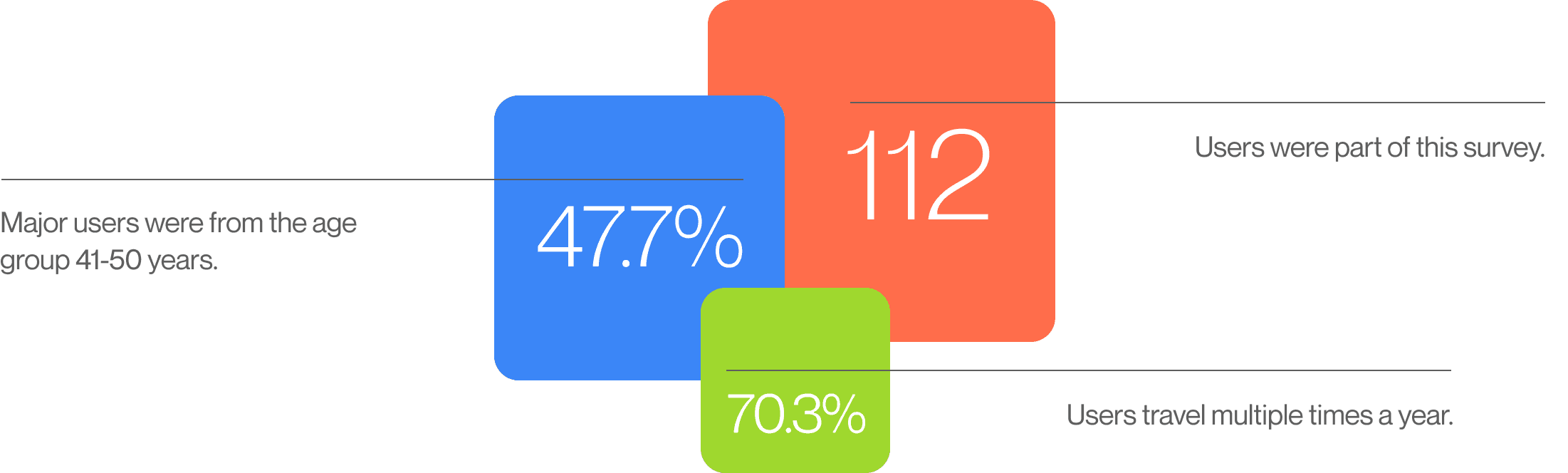
Survey insights highlight key travel pain points across planning, coordination, logistics, and accommodation.
Planning & Itinerary
1
Effective trip planning is challenging due to time constraints, unexpected delays, and the need to manage group preferences.
Accommodation
2
Finding reliable, hygienic, and suitable accommodation, especially for vegetarian travelers and remote locations, is often a struggle.

Group Travel Management
3
Coordinating schedules, preferences, and actions of multiple group members can create delays, conflicts, and missed opportunities.
Transportation & Logistics
4
Unreliable transport, delays, and confusion with local routes or terminals complicate travel, especially when navigating in a group.

Local Info & Navigation
5
Difficulty accessing reliable local information, navigating language barriers, and understanding local customs often causes disruptions.

Budget & Cost
6
Managing and comparing costs for accommodation, food, transport, and activities without overspending or facing financial uncertainty is tough.

Safety & Emergencies
7
Unreliable transport, delays, and confusion with local routes complicate travel, especially when navigating in a group.
Food & Dietary Preferences
8
Finding hygienic, vegetarian food that suit preferences, particularly in remote areas or during peak travel times, is a significant challenge.
Information Architecture
Information architecture was structured to define clear navigation, hierarchy, and user flow across the app.

User Flow
User flow was mapped to illustrate key actions and decision points throughout the travel planning process.

Wireframes
Low-fidelity wireframes were developed to outline the app’s core structure, user flow, and key interactions.

Visual Design
Building on the established wireframes and user flows, the visual design phase focused on bringing Relay’s identity to life —
creating a clean, intuitive, and experience-first interface that reflects the spirit of collaborative travel.

Typography
Typography was chosen for clarity and modernity, ensuring readability while complementing Relay’s design.
Neue Montreal
The quick brown fox jumps over the lazy dog.
abcdefghijklmnopqrstuvwxyz
ABCDEFGHIJKLMNOPQRSTUVWXYZ
123456789 !@#$%^&*()
Final Design
Typography was chosen for clarity and modernity, ensuring readability while complementing Relay’s design.
Relay is a collaborative travel app that turns group trip planning into a shared adventure letting friends co-plan, vote, and organize every detail effortlessly.


Relay includes an onboarding questionnaire that identifies traveler preferences to deliver personalized trip recommendations.

The Home Page introduces a swipe-based discovery experience, allowing users to explore and shortlist destinations effortlessly.
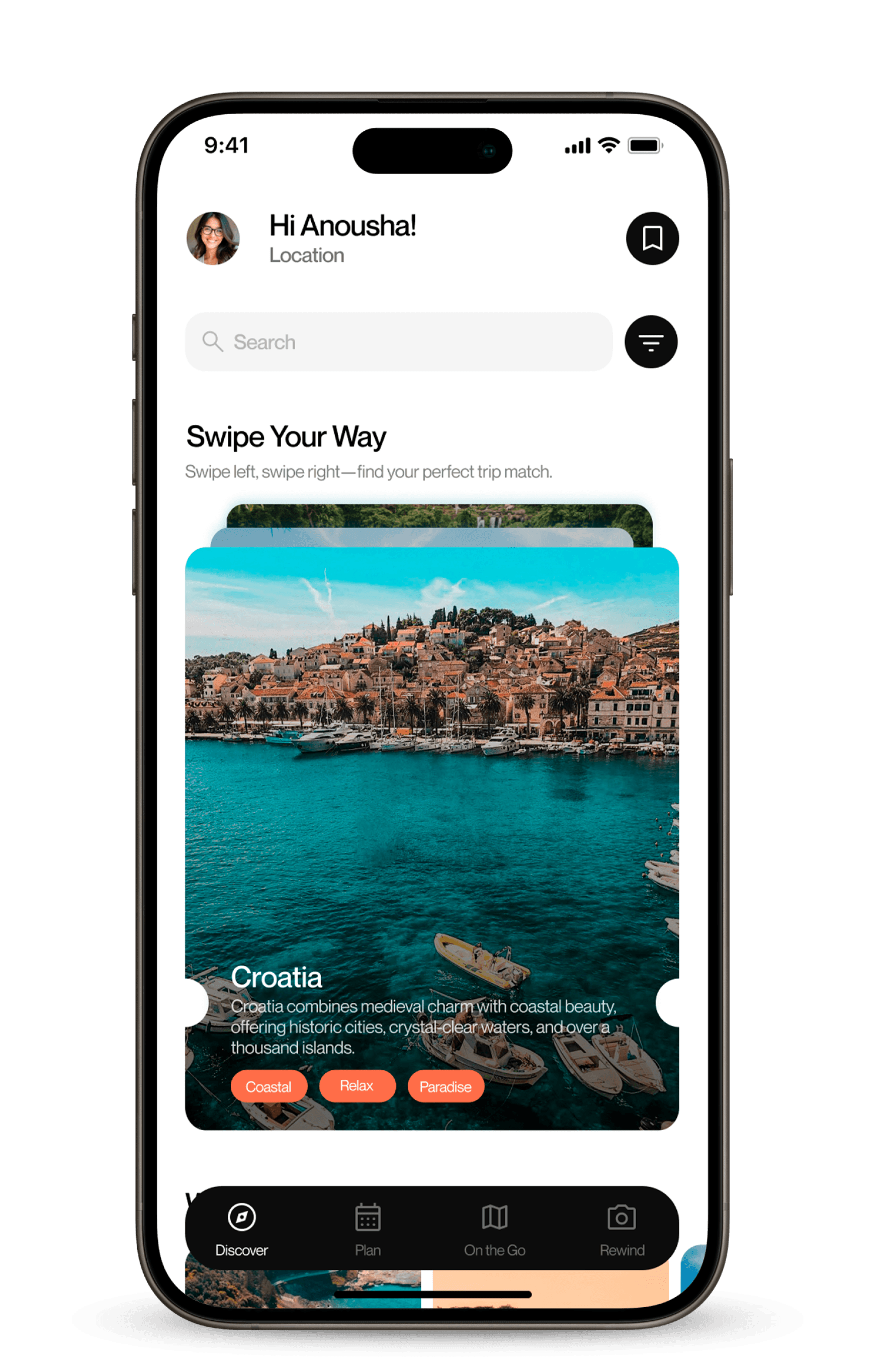
The Home Page introduces a swipe-based discovery experience, allowing users to explore and shortlist destinations effortlessly.


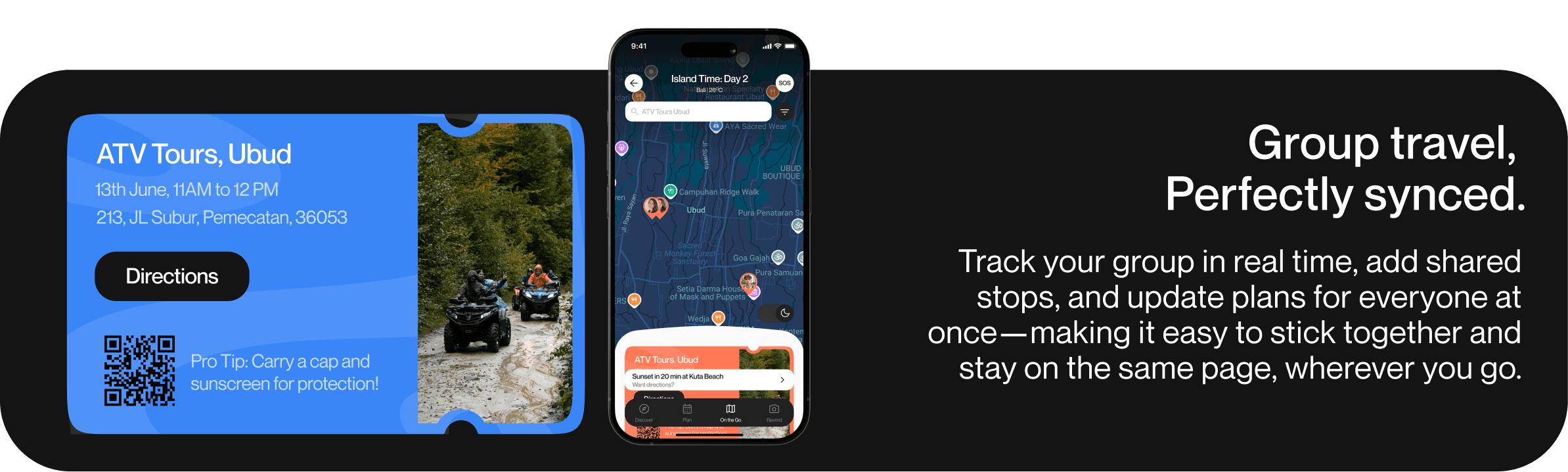
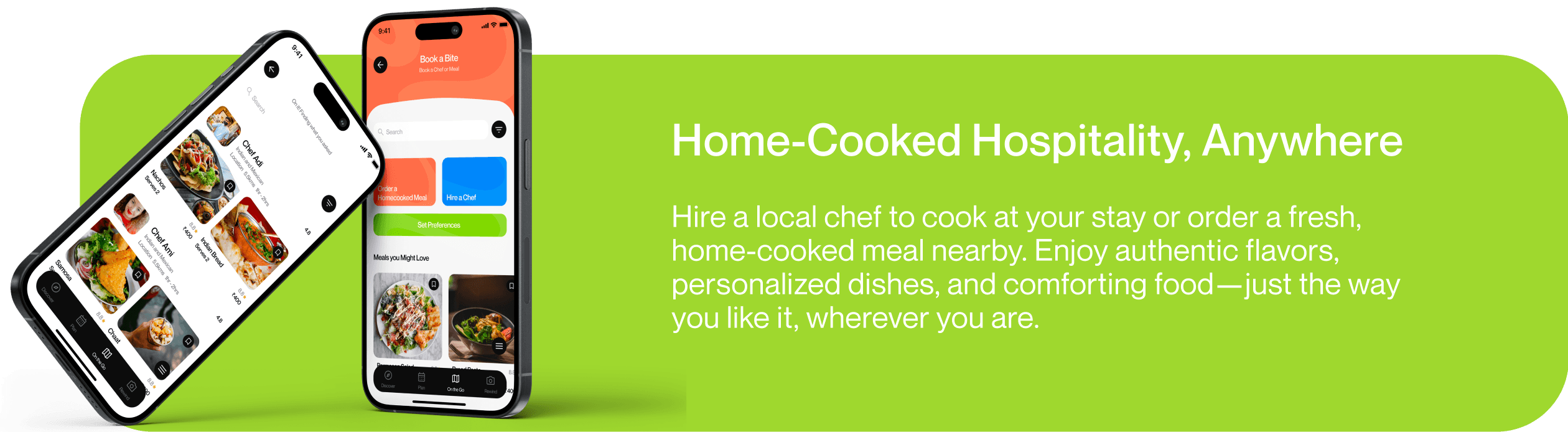

Step inside before
you arrive.
No more relying on filtered photos or vague descriptions. With AR/VR previews, you can walk through hotel rooms, scan the poolside, or test the feel of an experience—all from your screen. Know exactly what you’re getting, before you commit.


Your Trip, Turned Into a Journal
No more forgotten moments or scattered notes. The app automatically creates a digital journal from your trip—organizing your photos, check-ins, notes, sounds, and highlights into a beautiful, scrollable story.
Prototype and Test
Usability Testing
Navigation & Flow:
Intuitive layout with clear tabs and consistent visuals, though some confusion existed between Plan and On the Go sections due to overlapping expectations.
Itinerary & Group Features:
AI itinerary and group voting were time-saving and engaging. Uncertainty around auto-saving edits caused minor friction.
Booking & Meals:
Users liked personalized meal options with filters and visuals, but found the selection process a bit slow on smaller screens.
Explore Tools:
Swipe-based discovery and mood filters were fun and intuitive. Users wanted a way to visually compare saved destinations.
Rewind & Memories:
Highly emotional and memorable experience, but users wanted clearer ways to add notes and customize their memory timeline.